- English
- Deutsch
- Español
- Français
- Italiano
- Português
NIS2 doesn't accept a policy on paper. It wants proof, with continuous risk visibility, working incident detection, and evidence an auditor can actually open. Monitoring with PRTG gives your team that proof, automatically.
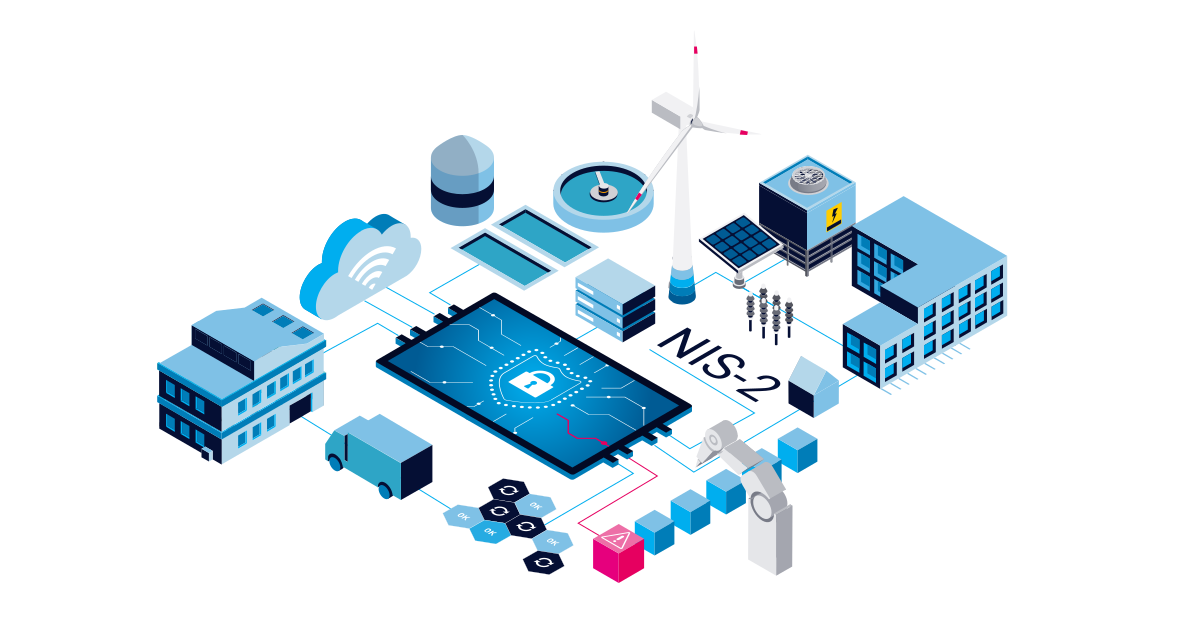


PRTG maps to several specific Article 21 risk-management measures.
⚠ PRTG supports these Article 21 measures. It is not an ISMS, SIEM, or GRC platform — and we won't pretend it is. Where PRTG stops and a dedicated compliance platform picks up is intentional — see the FAQ below for specifics.
Your PRTG monitoring data already includes everything an auditor will ask for: asset inventory, uptime history, alert response times, certificate status, and configuration change history.
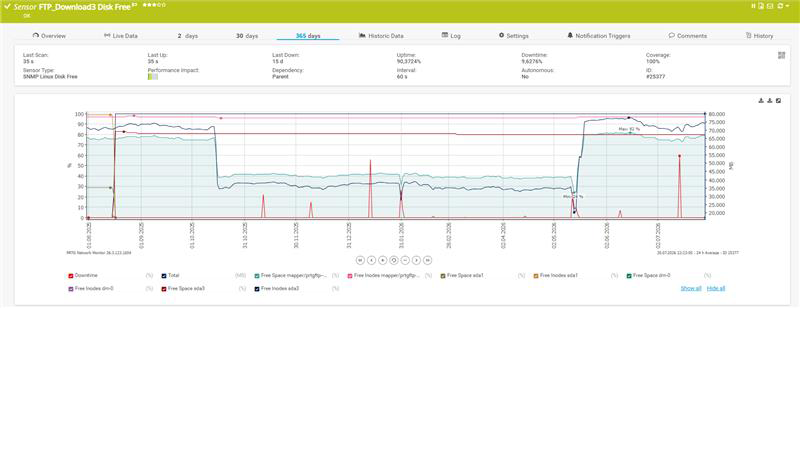
Continuous monitoring means the evidence trail already exists.
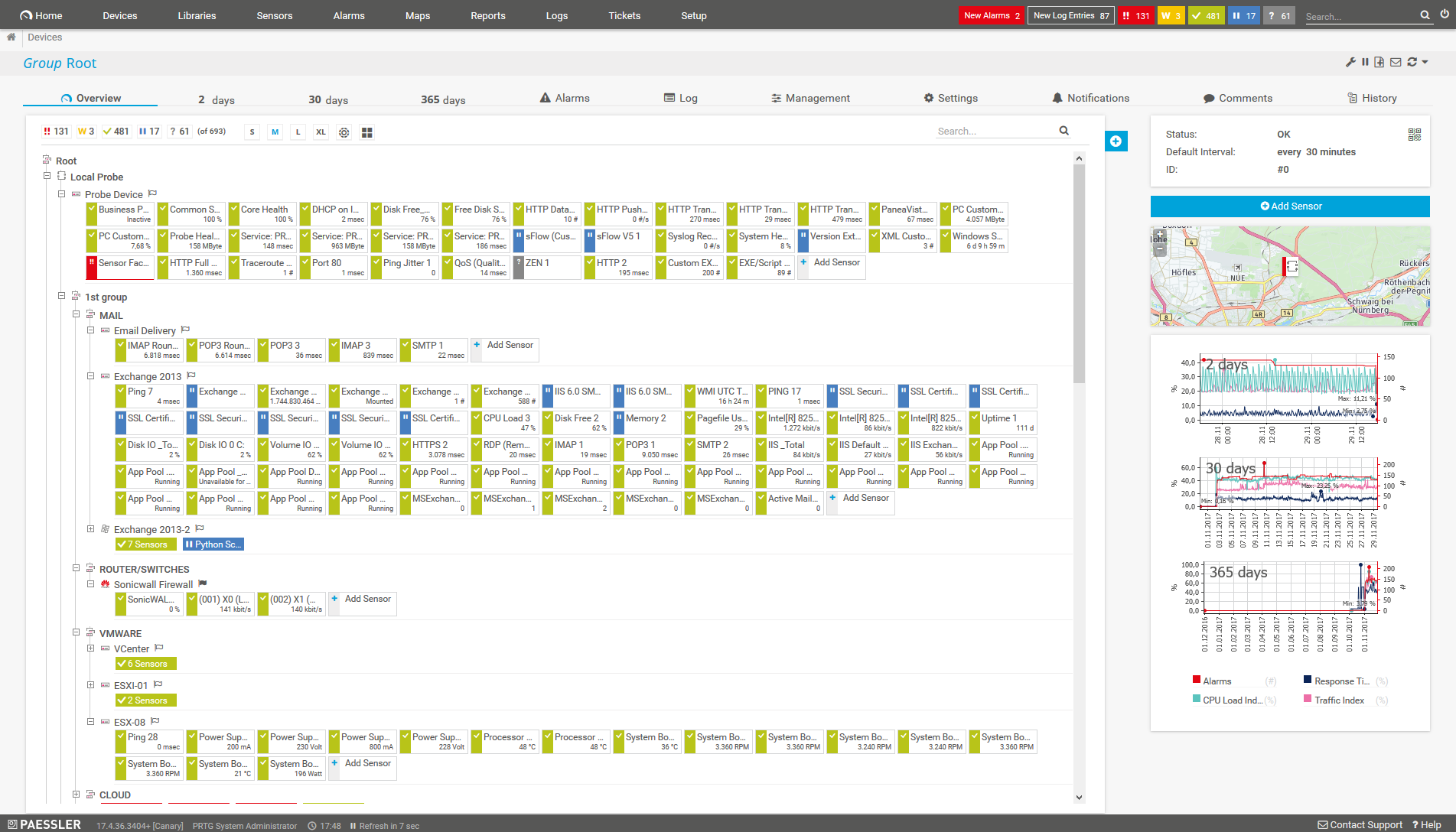
A complete, grouped view of every asset on the network.
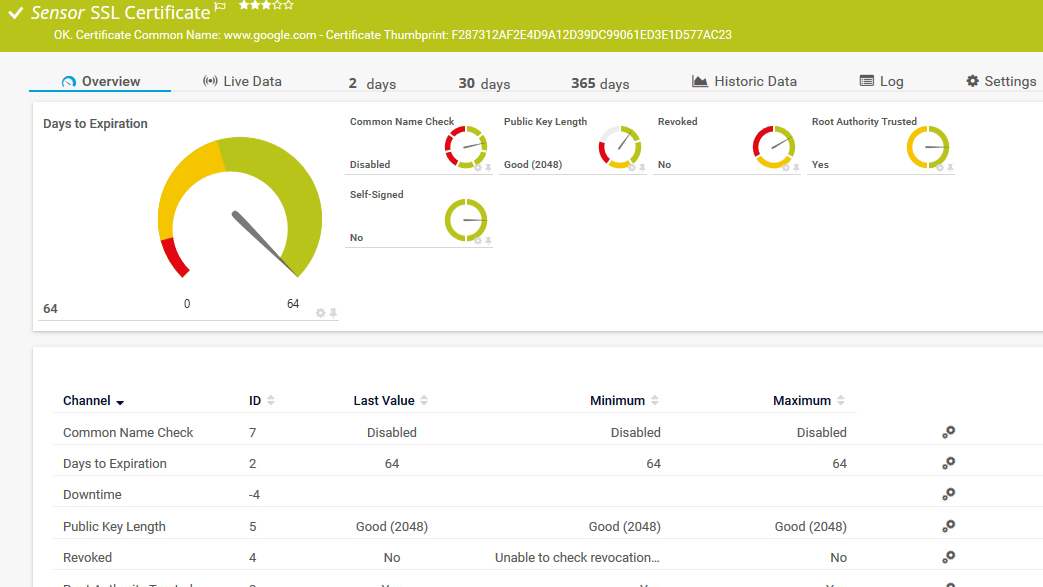
A continuous check of certificate validity and days to expiration.
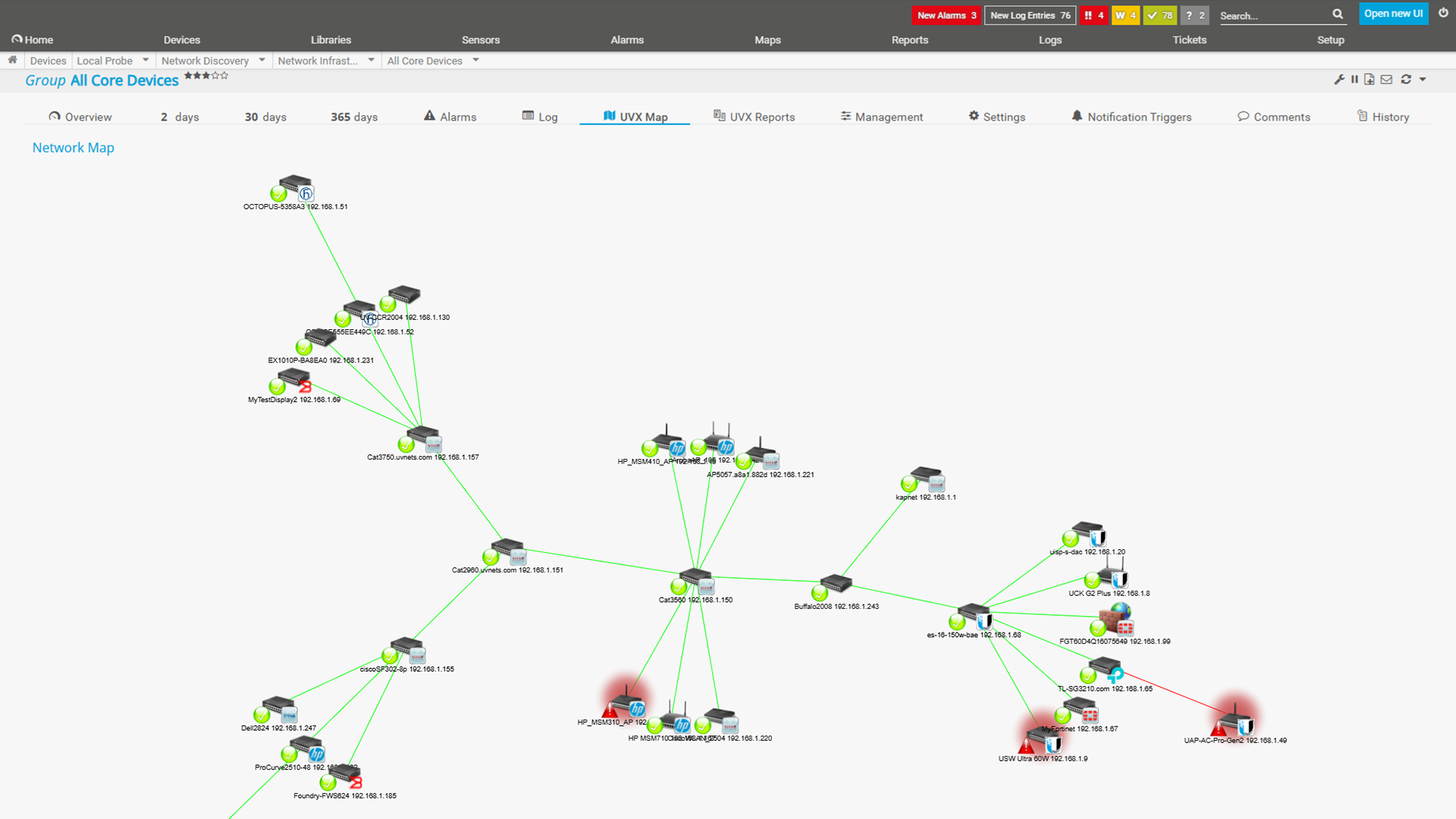
Devices and their dependencies, mapped automatically.
PRTG runs continuously in the background. When the audit request comes in, the data is already there.
PRTG ships with 250+ pre-configured sensor types, plus network discovery and change-management capabilities. These are the ones doing the work for Article 21.
See the PRTG Manual for a list of all available sensor types.
NIS2 applies across sectors differently. Here's how the fit breaks down by the sectors we see most often.

Among the highest-scrutiny sectors under NIS2. PRTG's support for SNMP, Modbus, and MQTT gives energy IT teams a single view across IT and OT, with automated topology and configuration change tracking across both domains.

Clinical uptime and network reliability are patient-care issues as much as compliance ones — visibility into servers, network infrastructure, and connected medical device networks.

Data center operators fall under NIS2's Digital Infrastructure category. PRTG's environmental sensors (temperature, humidity, power) plus server and network monitoring give facilities teams the continuous visibility Article 21 expects.

Public administration bodies face the same Article 21 requirements as private-sector essential entities, often with fewer dedicated security resources.

PRTG's IT/OT coverage, including Modbus, MQTT, and OPC UA, supports visibility in across plant-floor and corporate IT environments alike.

Typically also in scope for DORA. PRTG's third-party and API connectivity monitoring supports the operational resilience focus both frameworks share.
Companies around the world trust PRTG Network Monitor when it comes to ensuring that their IT systems run smoothly.

25,000 sensors, one dashboard, zero blind spots across IT and OT
ENGIE Solutions unifies monitoring across data centers, 900 agencies, and a growing IoT/OT fleet nationwide across France, proof that visibility scales with the infrastructure.

The anomaly caught before it became downtime
PRTG flagged a server-room issue via iLO monitoring before hardware failed. The same proactive visibility Germany's Hospital Future Act now requires.

99% of incidents resolved before anyone picks up the phone
DKV Mobility's fleet platform runs 24/7 across Europe, automated detection and restart scripts keep it that way, with humans only in the loop for the last 1%.

Speak with someone who understands NIS2-regulated environments.
No. PRTG supports the visibility, alerting, and evidence-gathering measures underneath several Article 21 requirements, but compliance depends on policy, governance, and controls beyond what any monitoring tool provides. PRTG does not replace an ISMS, SIEM, or GRC platform.
PRTG directly supports four Article 21 measure areas: risk analysis and asset visibility, incident handling, business continuity, and supply chain visibility.
Risk analysis and asset visibility (including topology and dependency mapping), early warning and incident handling, business continuity monitoring (including configuration backup and change tracking), and supply chain visibility, plus certificate and authentication-server availability monitoring that supports (but doesn't perform) access control and cryptography requirements.
No. PRTG doesn't perform cross-source log correlation, packet-level threat detection, CVE or patch scanning, or access management. It provides the underlying network and infrastructure visibility that feeds into those systems and into your audit evidence.
PRTG's alerting engine can shorten the time between an incident occurring and your team knowing about it, which is the first step toward meeting the 24-hour early warning and 72-hour incident notification deadlines Article 23 sets for significant incidents. PRTG does not generate or submit the regulatory report itself.
Yes. PRTG backs up device configurations automatically and shows you the diff between versions, refreshed on every scheduled discovery, so you can see exactly what changed, when, and roll that into your change-management evidence. It's config visibility and history, not a general-purpose backup or disaster-recovery platform for the devices themselves.
Yes. Article 21's risk-management measures apply to both Essential and Important entities, the difference is in supervision (proactive vs. reactive), not in the underlying technical requirements.
If you're a financial entity also subject to DORA, or an industrial organization referencing IEC 62443, the same underlying visibility applies. Talk to our team about your specific regulatory context.

Deploy visibility across your environment now. Your team decides what's watched — and why.