• Company
    • About Us
    • Case Studies
    • Press Center
    • Careers
    • Blog
    • Contact us
  • Contact us
  • Login
 
  • English
    • Deutsch
    • Español
    • Français
    • Italiano
    • Português
Paessler
                    - The Monitoring Experts
  • Products
    • Paessler PRTG
      Paessler PRTGMonitor your whole IT infrastructure
      • PRTG Network Monitor
      • PRTG Enterprise Monitor
      • PRTG Hosted Monitor
      • PRTG UVexplorer
      • PRTG extensionsExtensions for Paessler PRTGExtend your monitoring to a new level
    • Icon Features
      FeaturesExplore all monitoring features
      • Maps & dashboards
      • Alerts & notifications
      • Multiple user interfaces
      • Distributed monitoring
      • Customizable reporting
  • Solutions
    • Industries
      IndustriesMonitor various industry sectors
      • Industrial
      • Healthcare
      • Data Center
      • Education
      • Finance
      • Government
    • IT Topics
      IT TopicsMonitor all areas of IT
      • Network Monitoring
      • Bandwidth Monitoring
      • SNMP Monitor
      • Network Mapping
      • WiFi Monitoring
      • Server Monitoring
  • Pricing
  • Resources
    • Getting Started
      Getting StartedModules for self-paced learning
    • How-to Guides
      How-to GuidesGet the most out of PRTG
    • Videos & Webinars
      Videos & WebinarsLearn from Paessler experts
    • IT  Knowledge
      IT KnowledgeExpand your IT knowledge
    • PRTG Manual
      PRTG ManualFull documentation
    • Knowledge Base
      Knowledge BaseShare community knowledge
    • PRTG Sensor Hub
      PRTG Sensor HubGet sensors, scripts & templates
    • Trainings
      PRTG TrainingLearn how to work with PRTG
  • Partners
    • Icon Handshake
      Become a PartnerFor resellers and channel partners
    • Icon MSP
      Become an MSPDeliver monitoring as a managed service
    • icon partner
      Partner PortalLog in to your partner account
    • Deal Registration
      Deal RegistrationRegister your sales opportunities
    • icon search
      Find a PartnerFind partners selling Paessler products
    • icon technology
      Technology AlliancesSee Paessler technology partnerships
    • Partner HubTools for Your Success
  • Company
    • About Us
    • Case Studies
    • Press Center
    • Careers
    • Blog
    • Contact us
  • Contact us
  • Login
  • English
    • Deutsch
    • Español
    • Français
    • Italiano
    • Português
  • Get a quote
  • Free trial

Powerful IBM Monitoring

Track IBM server health, hardware status, and performance alongside the rest of your infrastructure from a single dashboard

Free download
PRODUCT OVERVIEW

How Do You Monitor IBM Server Health Across a Mixed Infrastructure?

PRTG monitors IBM System X servers via SNMP, providing near real-time tracking of critical hardware components including CPU temperature, fan speed, voltage levels, physical and logical disk status, and memory modules. PRTG’s pre-configured sensors reduce setup time while providing the performance monitoring capabilities needed to prevent outages and optimize resource utilization.

Note: The SNMP IBM System X System Health Sensor equires the IBM Systems Director Platform Agent on the target system. It can also run directly against an IMM network port.

Supported IBM Technologies:

PRTG monitors IBM System X servers with SNMP support, IBM Integrated Management Module (IMM), and can integrate with broader IBM infrastructure including Linux-based IBM servers and network bandwidth monitoring for IBM network components.

Download PRTG Trial

What you will find on this page

  • Get the Most Out of Your IBM
  • How PRTG Monitors IBM
  • Manual Monitoring vs. PRTG IBM Monitoring
  • FAQs

PRTG is compatible with all major vendors, products, and systems

compatible with all major vendors, products, and systems

Get the Most Out of Your IBM Server Infrastructure

Keep IBM Hardware Healthy with Continuous Component Monitoring

IBM server health changes gradually. CPU temperatures rise, fans lose RPM, voltages drift, and PRTG gives you continuous visibility into all of it before any single metric becomes a problem. The system health sensors track temperature, fan rotation, disk status, and component health across IBM System X hardware using SNMP. Set thresholds that match your operational tolerances and your team handles issues during scheduled maintenance windows, with the data and diagnostics already in front of them.

  • Monitor critical hardware components: track CPU and ambient temperature, fan rotation speed, CMOS battery voltage, and system board voltages
  • Alert on component degradation: get notified when hardware metrics indicate wear before total failure occurs
  • Physical and logical disk monitoring: detect disk health problems in individual drives and logical configurations via dedicated sensors
  • Memory module tracking: monitor RAM status before degrading memory affects performance
  • Reduce mean time to resolution: faster troubleshooting with detailed diagnostics and historical data

Unify Monitoring Across IBM and Multi-Vendor Infrastructure

Few IBM environments run in isolation. Depending on your setup, you might be managing IBM servers alongside Cisco network gear, Microsoft endpoints, Dell or HP hardware, or cloud services. Each vendor comes with its own monitoring tool, and switching between them to chase a single performance issue burns time and creates gaps where problems hide. PRTG brings it into one platform: IBM hardware health, network bandwidth, Linux and Windows servers, cloud APIs. When an IBM server CPU bottleneck connects to network congestion or cloud workload spikes you catch it without switching contexts.
  • One platform, hundreds of sensor types: monitor IBM servers, network devices, virtualization, and cloud services without juggling separate tools
  • Cross-infrastructure correlation: figure out whether performance issues start in the server, the network layer, or somewhere external
  • Multi-vendor compatibility: Cisco, Microsoft, Linux, AWS, Azure and other providers work out of the box
  • Eliminate tool sprawl: one monitoring solution instead of several
  • Customizable dashboards: show IBM metrics next to bandwidth, endpoint status, and cloud-native services in a single view
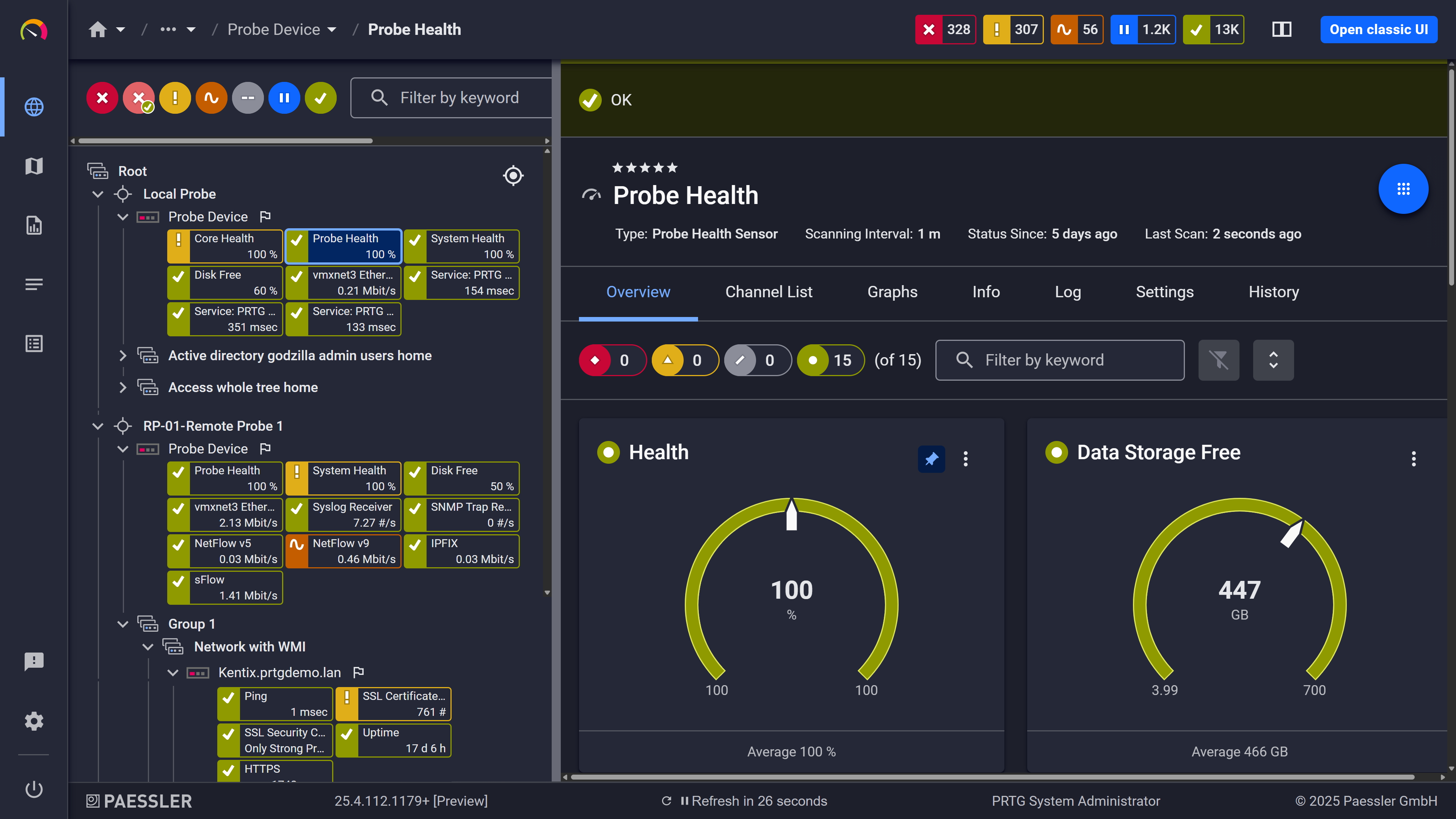
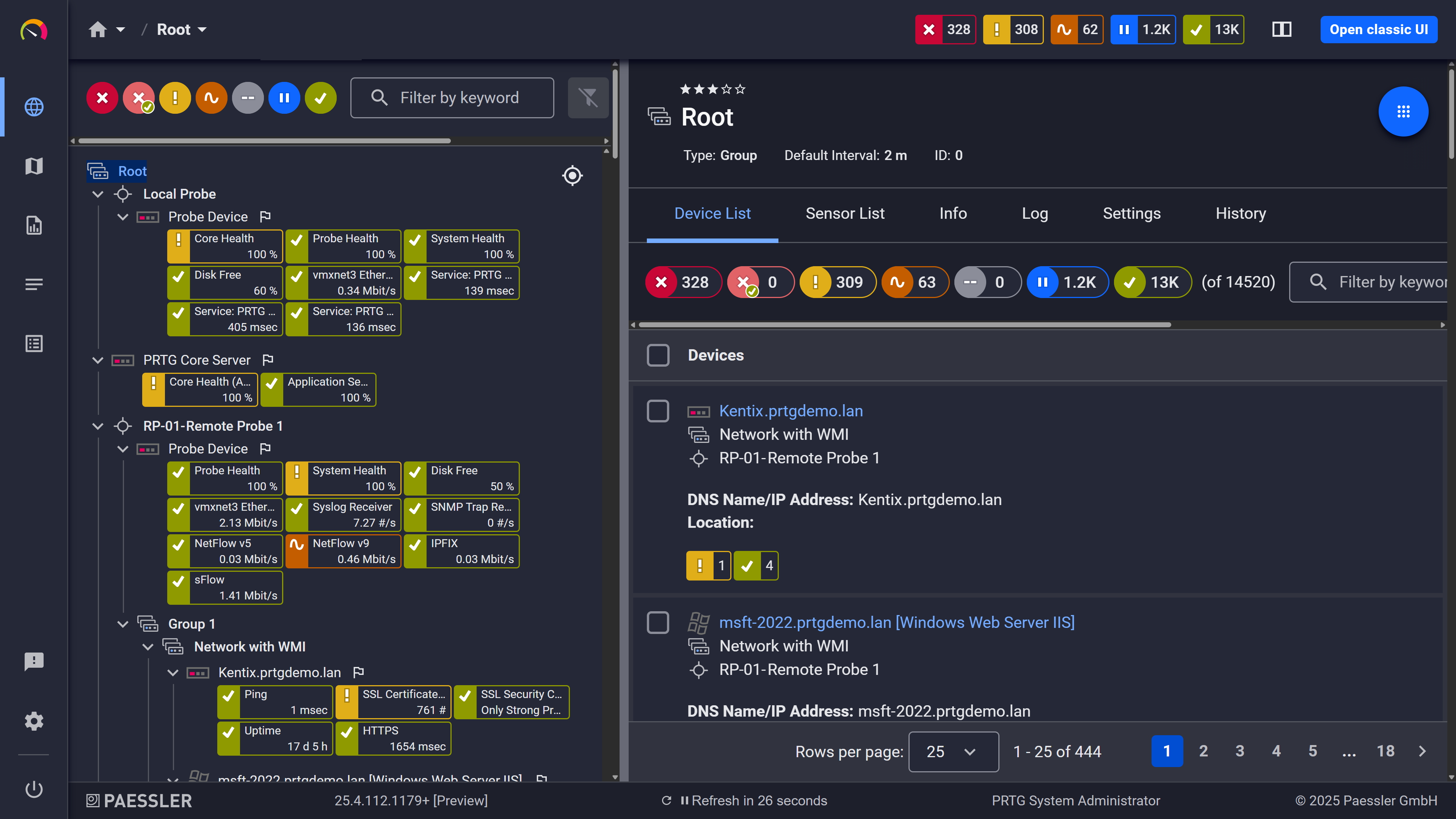
PRTG web interface showing device tree and full device list with sensor status badges

Full device list, instant overview

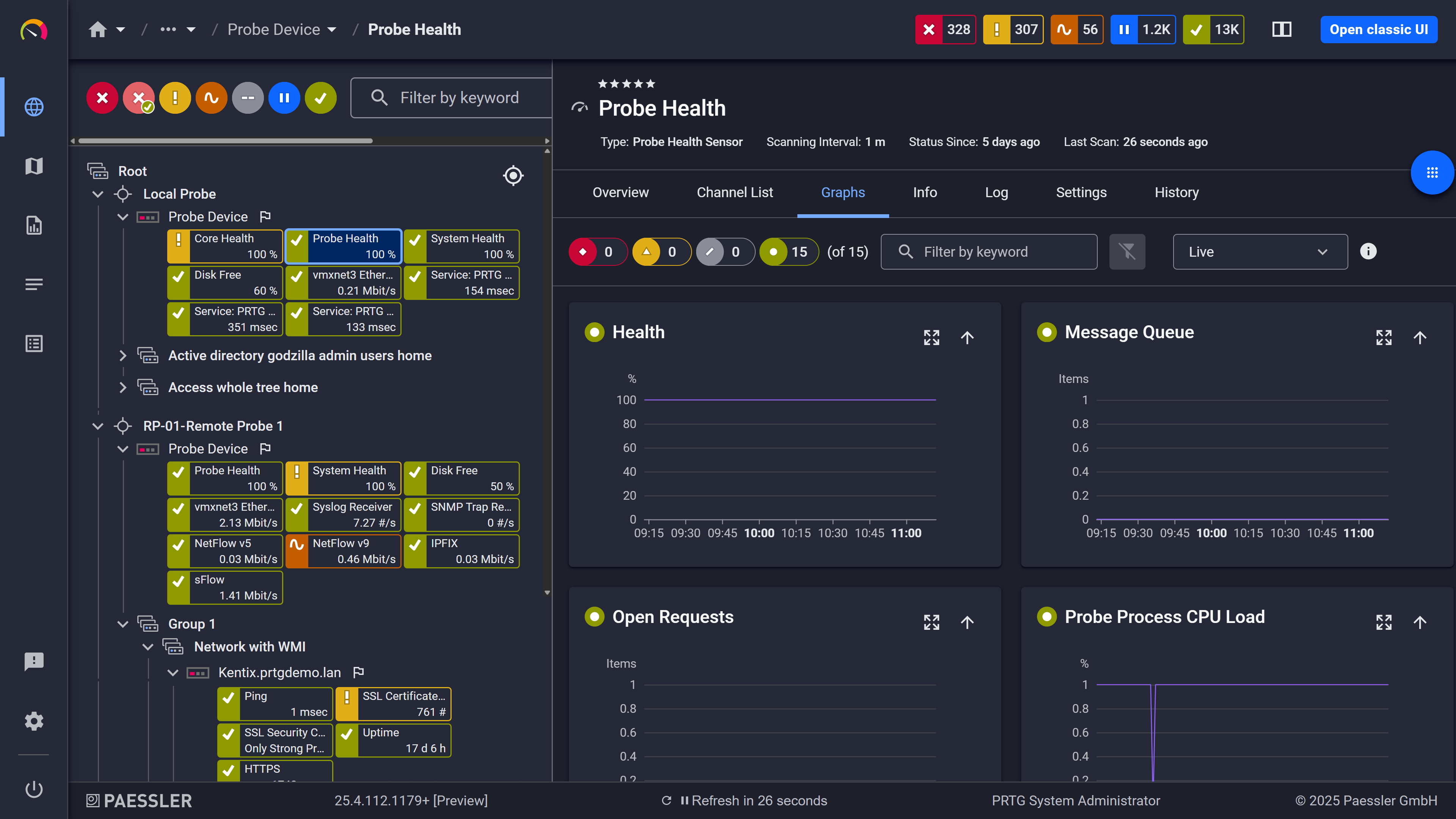
PRTG web interface showing Probe Health sensor with health and storage gauge widgets

Probe health at a glance

PRTG web interface showing live performance graphs for a Probe Health sensor

Live graphs, real-time performance data

Deploy Monitoring Faster with Pre-Configured IBM Sensors

Setting up SNMP monitoring for IBM Integrated Management Module (IMM) shouldn’t require days of manual MIB file configuration and OID mapping. Lean IT teams don’t have time for complex setup, and decentralized sites need monitoring running now, not after waiting weeks for corporate IT support. PRTG includes pre-configured sensors for IBM System X hardware that eliminate manual configuration. Auto-discovery scans your network, identifies IBM servers, and suggests appropriate sensors. While SNMP must be enabled on your IBM servers, PRTG handles the sensor logic automatically, reducing deployment time from days to hours.

  • Pre-configured IBM sensors: System Health, Physical Disk, Logical Disk, and Physical Memory sensors ready to use
  • Auto-discovery: PRTG scans your network via IP addresses and suggests sensors based on detected IBM hardware
  • No manual MIB configuration: the IBM System X sensors use built-in sensor logic, no custom OID mapping or MIB imports needed
  • SNMP v1, v2c, and v3 support: works with whatever SNMP version your IBM servers are configured to use
  • Fast time to value: get monitoring operational quickly without deep SNMP expertise or professional services

See Why IT Professionals Trust PRTG

Start monitoring your infrastructure in minutes. No professional services, no complex configuration, no risk.

Free download
PRODUCT OVERVIEW

Use Historical Data to Plan Infrastructure Lifecycle

Aging IBM System X servers running mission-critical workloads don’t get replaced on a convenient schedule. Budget constraints, application dependencies, and internal approval cycles mean these systems stay in production longer than ideal. What you need is trend data that makes the case for replacement before a failure makes it for you. PRTG stores sensor data over time so you can track gradual degradation: rising average temperatures, increasing disk errors, memory issues getting more frequent. That gives you something concrete to bring to budget conversations instead of a gut feeling about aging hardware.
  • Long-term trend visibility: track hardware health metrics over months or years to identify degradation patterns
  • Capacity planning evidence: export historical data showing when servers approach performance or reliability limits
  • Budget justification: demonstrate hardware aging with concrete metrics when requesting replacement funding. That’s harder to argue with than anecdotal reports.
  • Migration timing: schedule application migrations during planned maintenance windows rather than emergency outages
  • Cost-effective asset management: proactive monitoring extends infrastructure investments and cuts reactive replacement costs
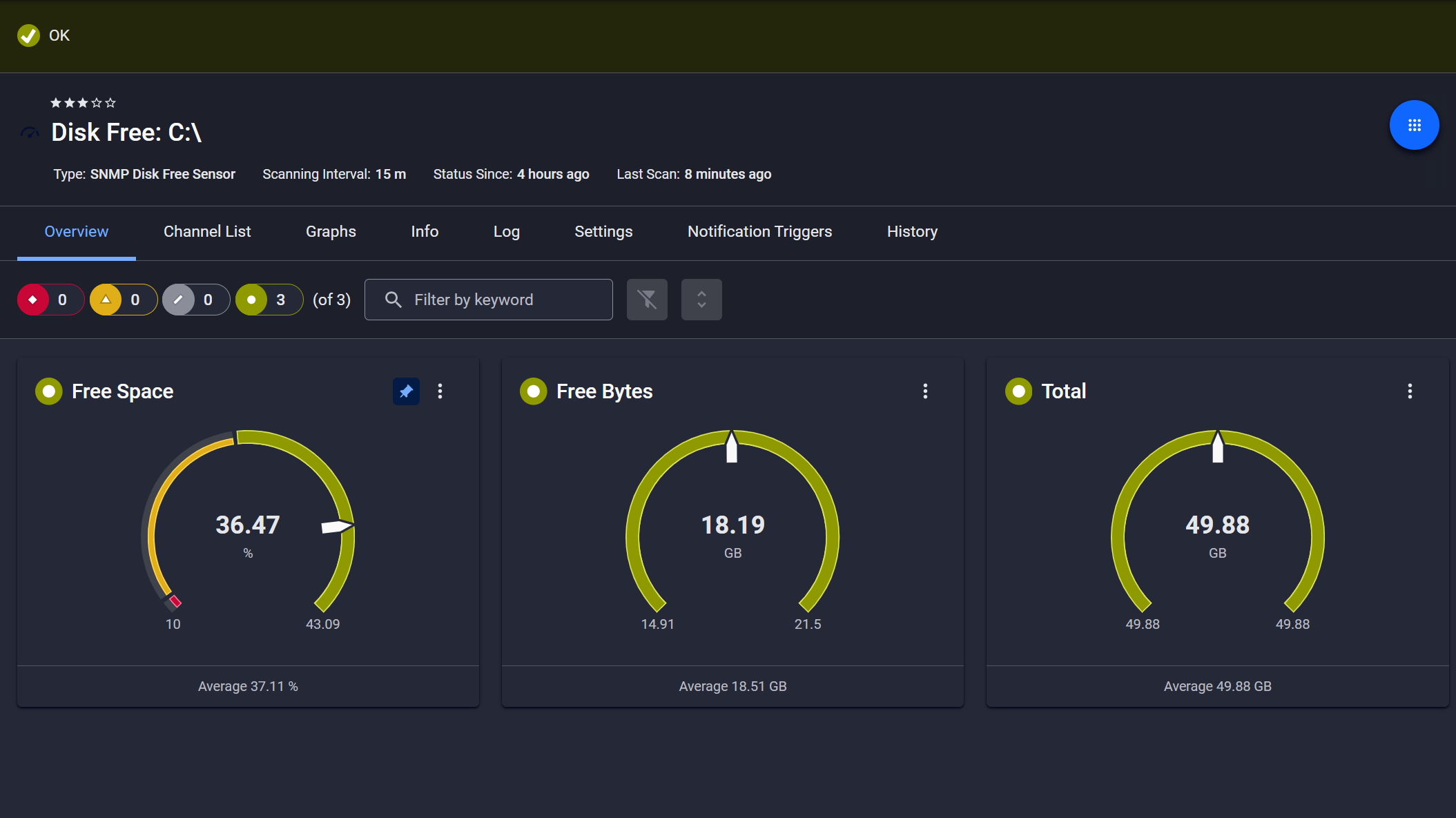
PRTG SNMP Disk Free sensor showing free space, free bytes, and total disk capacity gauges

Disk space monitored, alerts ready

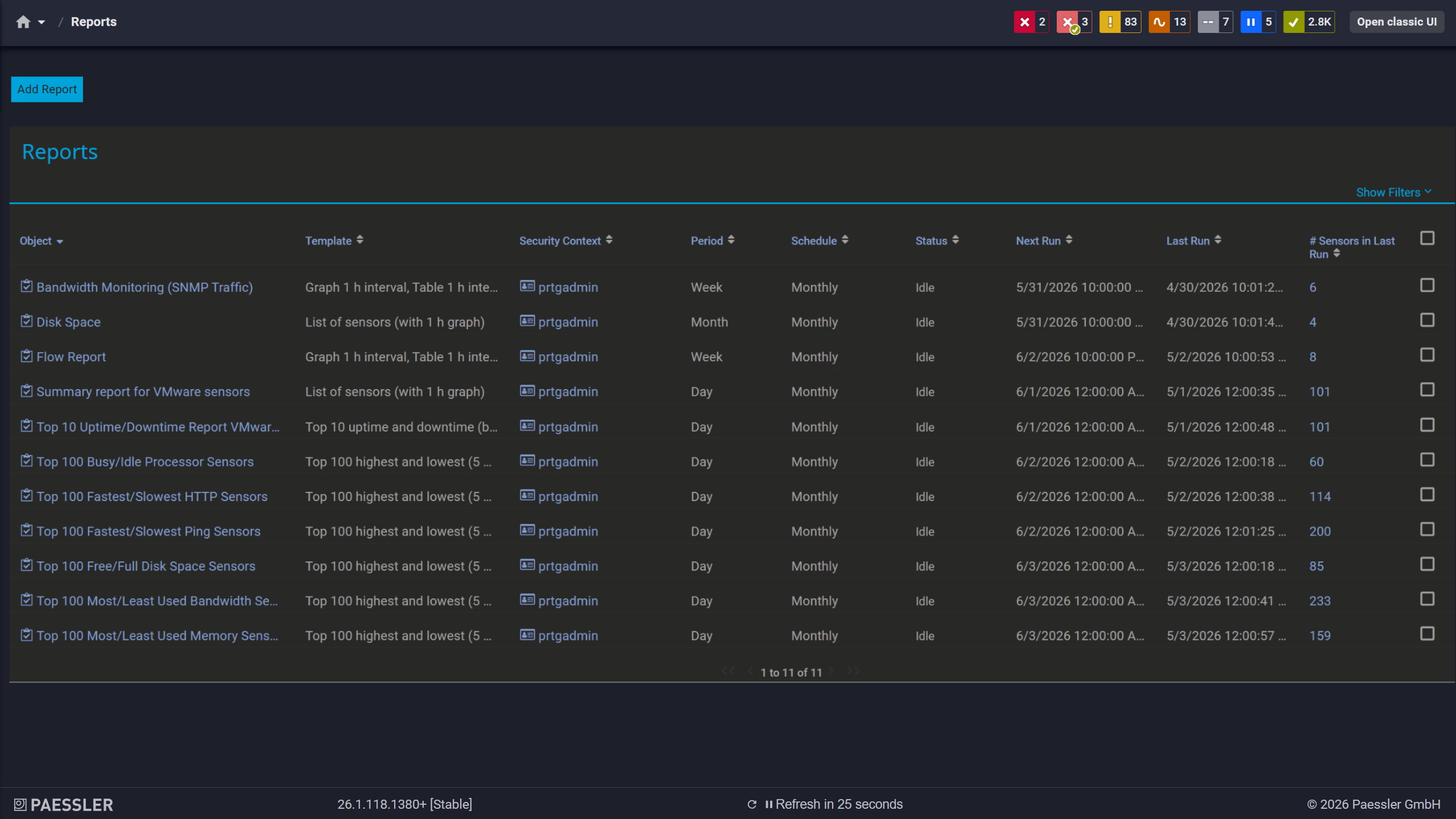
PRTG reports list showing scheduled monitoring reports with run times and sensor counts

Scheduled reports, always on time

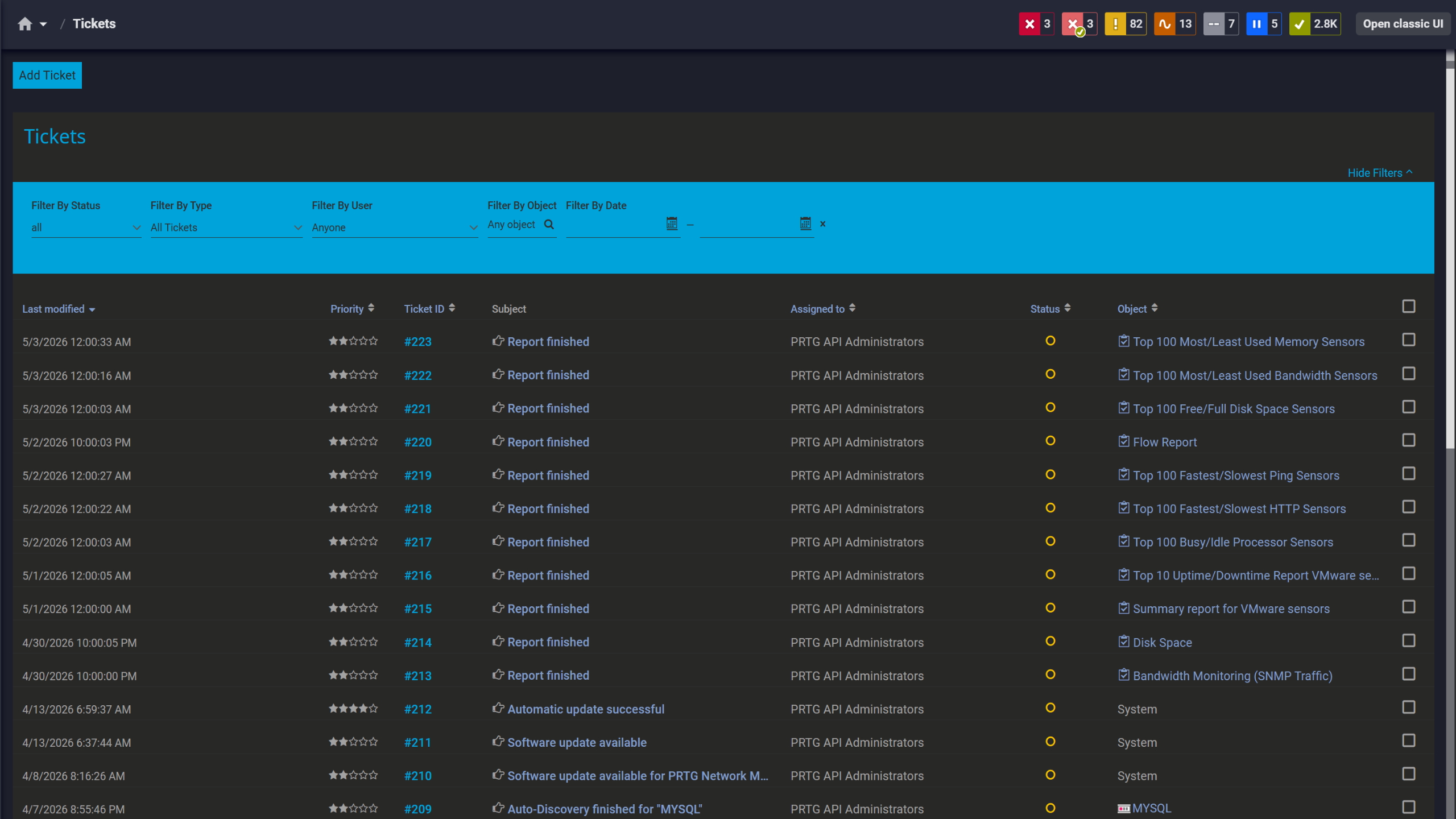
PRTG tickets list showing system notifications, report completions, and update alerts

Tickets keep your team aligned

Monitor IBM Servers in Hybrid Cloud Architectures

On-premises IBM servers don’t operate in isolation anymore. Most production environments mix physical hardware with cloud instances and SaaS applications, and siloed monitoring tools leave gaps exactly where performance issues tend to hide. PRTG connects traditional server monitoring with cloud observability through API integration. REST sensors can pull metrics from AWS, Azure, or any cloud provider API directly into PRTG (with additional configuration) then you combine that data with on-premises IBM server health in unified dashboards. No custom middleware required. Response times, bandwidth between sites, VM performance: one view covers it.

  • Hybrid infrastructure visibility: monitor on-premises IBM servers alongside AWS and Azure resources in unified dashboards
  • REST API integration: pull metrics from cloud services and external APIs using the REST Custom sensor
  • HTTP/HTTPS monitoring: track response times and availability for cloud-native services and web applications
  • Network performance visibility: monitor bandwidth between on-premises IBM infrastructure and cloud providers
  • DevOps integration: PRTG’s HTTP API lets you query sensor data, trigger actions, and connect monitoring into existing toolchains without building custom middleware

How PRTG Monitors IBM Hardware 

PRTG uses industry-standard protocols and pre-configured sensors to monitor IBM System X servers and related infrastructure. Here’s what that looks like in practice and what data you actually get out of it.

SNMP Health Monitoring 

PRTG monitors IBM System X servers via SNMP, with the IBM Systems Director Platform Agent installed on the target system. Alternatively the sensor runs directly against an IMM network port if that fits your setup better. The SNMP IBM System X System Health sensor queries the IMM and pulls ambient and CPU temperature, fan RPM, CMOS battery voltage, and system board voltages. SNMP v1, v2c, and v3 are all supported. V3 adds encrypted authentication, which matters if you’re monitoring across network segments you don’t fully control.

Disk Monitoring  

Disk monitoring in PRTG splits across two sensors for a reason. The Physical Disk sensor tracks individual drive health; the Logical Disk sensor covers logical disk configurations separately. Both query IBM’s MIB via SNMP. What that gets you is early detection of failures or degraded states before a drive problem surfaces as a production outage. Combined with CPU temperature and memory data, the hardware health picture stops being guesswork.

Alerts and Notifications  

Thresholds in PRTG are configured per sensor, not globally. That distinction matters if you’re running production and development servers in the same environment: different limits for each, no workarounds needed. When a metric crosses the line, PRTG fires alerts via email, SMS, push notifications on iOS and Android, HTTP requests, or custom scripts. And when a master sensor goes down PRTG pauses dependent sensors automatically, so a single failure doesn’t bury you in false positives.

Data Retention 

PRTG keeps historical sensor data based on retention policies you configure. The web UI surfaces that data in graphs, tables, and status indicators. Useful for spotting patterns like temperatures climbing slowly over weeks rather than spiking once. Reports export as HTML, PDF, CSV, or XML. Custom maps give you IBM server status across multiple geographic locations in a single visualization, which is where this feature starts paying off at scale.

Remote Probes 

Remote probes handle monitoring locally and relay data back to the central PRTG core server. Monitoring traffic stays on-site, WAN consumption stays low. Every remote probe supports the same IBM sensors as the core server so you’re not dealing with capability gaps between sites. All alerting and reporting still runs through one central installation regardless of how distributed the environment gets. It scales without requiring a separate monitoring setup per location, which is usually where distributed monitoring gets complicated.

free downLoad

Manual Monitoring vs. PRTG IBM Monitoring

FEATURE

Manual Approach

Manual Approach

With PRTG

With PRTG 

Checking IBM server temperature

Manual Approach
not included

Log into each IMM web interface individually, check temperature readings, record in spreadsheet

With PRTG
included

Automated SNMP polling, dashboard visualization, alerts when conditions are met

Disk health verification

Manual Approach
not included

Run diagnostics on each server, review controller logs, compile status reports

With PRTG
included

Physical and Logical Disk sensors poll disk status and trigger alerts on failures

Tracking hardware trends over time

Manual Approach
not included

Manually export and archive logs from multiple sources for later analysis

With PRTG
included

Built-in historical data storage with graphing and export capabilities for trend analysis

Getting notified of hardware issues

Manual Approach
not included

Manually check logs or wait for users to report problems

With PRTG
included

Alerts configured once, automatic notifications via email, SMS, push, or integrations

Multi-site infrastructure visibility

Manual Approach
not included

Maintain separate monitoring setup for each location or poll everything across WAN

With PRTG
included

Remote probes at each site relay data to central installation, unified visibility across locations

free downLoad

There are around 20 people within the business across various departments using PRTG who look at the dashboard, but the beauty of it is that we don't really have to look at it. In terms of its day-to-day use, we just let it do its thing, and we just act on alerts when necessary.

Ollie Kerslake, Infrastructure Lead
Riverford Organic Farmers

“The tool has given us greater control over all types of devices connected to the network (switches, IP telephony, security cameras, IoT, WiFi) that previously remained opaque when dealing with service incidents. This has improved our ability to diagnose and resolve problems, which has translated into greater efficiency and a better user experience in both internal and public services.”

Jordi Tolosà Bel, New Technologies Technician
Vinaroz City Council

“Our objective was to be able to monitor the health of our most critical servers containing data and applications, but also the flows and bandwidth between headquarters, our 50 servers in the cloud and the 15 servers at our production sites. For us, it is essential to have a proactive approach to understand where the weaknesses of the IT system are to be able to improve them.”

Marc Boullier, CIO
Carambar & Co

Paessler PRTG Network Monitor licenses & pricing

Choose the PRTG Network Monitor subscription that's best for you.

License NameLicense descriptionPriceLicense DetailsGet startedPricing Details
PRTG 500$200per month paid annuallyBuy nowBuy now

Enough to monitor multiple aspects of 50 devices

PRTG 1000$358per month paid annuallyBuy nowBuy now

Enough to monitor multiple aspects of 100 devices

PRTG 2500$742per month paid annuallyBuy nowBuy now

Enough to monitor multiple aspects of 250 devices

PRTG 5000$1,300per month paid annuallyBuy nowBuy now

Enough to monitor multiple aspects of 500 devices

PRTG 10000$1,642per month paid annuallyBuy nowBuy now

Enough to monitor multiple aspects of 1000 devices

Over 100,000 Customers Worldwide Love Paessler  

customer success stories

 IBM Monitoring: Frequently Asked Questions


Which IBM servers does PRTG support?

IBM System X servers with SNMP enabled on the IMM. That covers v1, v2c, and v3. If a sensor isn’t connecting, check the IMM first: wrong community string or a firewall blocking UDP 161 account for most of it.

Do I need to install agents on my IBM servers?

For the SNMP IBM System X System Health sensor, yes: the IBM Systems Director Platform Agent needs to be on the target server. Alternatively it runs directly against an IMM network port, which is useful if installing software on the server isn’t an option. Disk sensors are agentless and go through SNMP directly. Either way SNMP has to be enabled on the IMM with the right credentials before any of this works.

How does PRTG handle firmware updates or IMM configuration changes?

Usually fine. Firmware updates don’t break monitoring as long as SNMP stays enabled and the credentials don’t get reset. The part that does cause issues is when a firmware update silently resets community strings back to defaults, because PRTG doesn’t know that happened until sensors stop responding. When they do, you get alerted. Update the device settings in PRTG and you’re back.

What metrics does PRTG collect from IBM servers?

CPU temperature and usage, ambient temperature, fan RPM, CMOS battery voltage, system board voltages, physical and logical disk status, memory module health. Network interfaces, bandwidth, and response times for services running on the server too. All of it supports configurable thresholds and historical retention, though retention periods depend on your PRTG configuration.

How does PRTG handle IBM servers in remote or distributed locations?

Remote probes. Install one at each site, it monitors local IBM servers and relays data back to the central core server. Same sensors, same capabilities as the core. The monitoring traffic stays local which matters if your WAN links are constrained. Everything still shows up in one place centrally.

Can PRTG integrate with IBM Cloud or external APIs?

There’s no native IBM Cloud integration. What PRTG does have is the REST Custom sensor and support for custom PowerShell and Python scripts, which between them cover most API-based data sources. It takes some setup but it gets IBM Cloud metrics into the same dashboards as your on-premises hardware data. Not plug-and-play, but workable.

What are the prerequisites for monitoring IBM servers with PRTG?

SNMP enabled on the IMM, community string or v3 credentials ready, IBM Systems Director Platform Agent installed if you’re using the SNMP IBM System X System Health Sensor, network access from the PRTG probe to the server’s management IP, and UDP port 161 open through any firewalls in between. Get those five right and PRTG’s auto-discovery handles the rest with the Server (IBM) device template.

Paessler PRTG

Paessler PRTG

Network Monitoring Software – Version 26.1.116.1532 (February 9th, 2026)

Hosting icon

Hosting

Download for Windows and cloud-based version PRTG Hosted Monitor available

Languages icon

Languages

English, German, Spanish, French, Portuguese, Dutch, Russian, Japanese, and Simplified Chinese

test

Monitor everything

Network devices, bandwidth, servers, applications, virtual environments, remote systems, IoT, and more

test

Pricing

Choose the PRTG Network Monitor subscription that's best for you

Discover more monitoring insights and stories

Content illustration

Powerful stories from the monitoring world

  • Monitor an IBM i (OS/400) server as easily as any other server
  • Monitor IBM System X servers with PRTG - Paessler Blog
  • Top sensors in PRTG to monitor your Dell, HPE and IBM server ...
Support illustration

Resources to master your monitoring challenges

  • PRTG Manual: SNMP IBM System X Logical Disk Sensor - Paessler
  • PRTG Manual: SNMP IBM System X System Health Sensor - Paessler
  • Monitoring IBM MQ
Solution illustration

Solutions for all your monitoring needs

  • IBM Monitoring
  • Storage Monitoring
  • Server Health Monitoring
PRTG Logo

Start Monitoring with PRTG and see how it can make your network more reliable and your job easier.

Free download
PRODUCT OVERVIEW

Products

  • Paessler PRTG
    Paessler PRTGMonitor your whole IT infrastructure
    • PRTG Network Monitor
    • PRTG Enterprise Monitor
    • PRTG Hosted Monitor
    • PRTG UVexplorer
    • PRTG extensions
      Extensions for Paessler PRTGExtend your monitoring to a new level
  • Icon Features
    FeaturesExplore all monitoring features

Monitoring with PRTG

  • Network monitoring
  • Bandwidth monitoring
  • SNMP monitoring
  • Network mapping
  • Wi-Fi monitoring
  • Server monitoring
  • Network traffic analyzer
  • NetFlow monitoring
  • Syslog server

Useful Links

  • PRTG Manual
  • Knowledge Base
  • Customer Success Stories
  • About Paessler
  • Subscribe to newsletter
  • PRTG Support
  • PRTG Consulting
  • PRTG Feedback & Roadmap

Contact

Paessler GmbH
Thurn-und-Taxis-Str. 14, 
90411 Nuremberg 
Germany

[email protected]

+49 911 93775-0

  • Contact us
©2026 Paessler GmbHTerms & ConditionsPrivacy PolicyImprintReport VulnerabilityDownload & InstallSitemap
CCTV CCTV CCTV